More about the photography, author and the campaign…

  • This beautiful dwarf iris grows only in the lower Clackamas and Molalla river canyons. Despite its super-local range, it’s not considered endangered, though it’s still a rare thrill for wildflower seekers to find them in bloom. These little plants grow in open, sunny gaps in Douglas fir forests and produce their pale blue or white blooms in late spring. This photo was taken on a rocky outcrop high above the water along the Clackamas River Trail. 

    The lower Clackamas River canyon has burned three times in the past two decades, most severely in the 2020 Riverside Fire. The Clackamas River Trail has since remained closed by debris and landslides from this latest fire, so we won’t know until it reopens how the Clackamas iris has fared. If forest recovery in other recent burns is any indication, the iris here should have survived – and in fact, should be thriving in the more open conditions created by the fire.

    ___________

    Image Description: A trio of white iris bloom in a diagonal line, accented with narrow yellow throats. The blooms are framed by bright green, strap-shaped iris foliage. A neighboring fern sneaks a frond into the right side of the image.

    Photo © WyEast Images (2026)

  • Named for a long-vanished Gorge settlement near Mosier, the Ortley Thrust is a prominent upward fold in the massive bedrock of Columbia River Flood Basalts that form the walls of the Columbia Gorge. Here, the once-horizonal layers of lava have been pushed upward by enormous tectonic pressures that have created uplifted ridges across this part of the Columbia Basin. The river has been here longer than both the ancient basalt flows and subsequent geologic uplift, keeping pace as it continually carves its channel through the slowly rising land around it.

    The Ortley Pinnacles are part of the larger thrust formation, marking a seam between two major flood basalt groups. The flat basalt flows here have been turned on end from the uplift pressure. In much more recent geologic time, a series of massive ice age floods scoured the Gorge walls, stripping away loose rock to reveal the rugged maze of vertical basalt spires and fins we see here today. In early spring, emerging wildflowers paint up the slopes in shades of green while Bigleaf maple blossoms provide the bright yellow highlights.

    ___________

    Image Description: A series of jagged, rocky basalt fins and pinnacles at center rise against steep slopes covered with the spring green of emerging wildflowers. Bigleaf maples are sprinkled across the slopes, marked by their bright yellow spring blossoms.

    Photo © WyEast Images (2026)

  • Folks heading up to visit the iconic wildflower displays each spring at the Columbia Hills Preserve on Dalles Mountain might not notice this solitary basalt outcrop along the way, but it holds a surprise for their return trip, especially in late spring and summer evenings: in the right light a smiling face appears in the cliff face, near the top of the rock. Can you see it? To some, it might look like Thalia, the Greek theater muse of comedy. To others it might look more like a smiling Jack of Hearts. Or for space flick nerds, how about Groot from Guardians of the Galaxy?

    This handsome rock has no official name. It’s also located on private land adjacent to the Columbia Hills preserve, though it is partly owned by area tribes who have been coordinating with public land agencies to protect iconic East Gorge places like this in perpetuity. 


    It’s an especially beautiful spot in spring, when the landscape is green with new grass and emerging wildflowers. The rock is also home to a colony of yellow-bellied marmots whose network of dens straddle Dalles Mountain Road. If you’re patient, they can be viewed from pullouts along the road when they are most active in the morning and evening.

    Here’s a closer view with the evening light hitting the “smiling” north side of the rock. Can you see it now?

    ___________

    Image Description: A haystack-shaped basalt monolith rises above bright green, windswept desert grasses and wildflowers on an early spring evening. Beyond, the deep blue Columbia River glides past towering cliffs. In the far distance, rolling desert hills are carpeted with spring green. Wispy white clouds complete the backdrop against a pale blue evening sky.

    Photo © WyEast Images (2026)

  • It might be the most Zen spot on Mount Hood. This is the western sibling of twin tarns located high on the shoulder of Cathedral Ridge, just below McNeil Point. The Timberline Trail travels between the pair (along the far shore in this view) making these a familiar highlight for thousands of hikers each year. 

    This early September scene captures an early dusting of snow on the mountain after the arrival of the first wave of cool, fall weather. Over the course of summer, the tarns shrink dramatically from their springtime high-water mark, with seasonal grasses quickly carpeting the expanding shorelines. 

    These tiny lakes fill hollows made by a long-vanished ice-age glacier that once filled this alpine basin. The patch of snow near the top of the distant ridge marks were the glacier once originated, and the cliffs on the left and mark the valley it carved.

    ___________

    Image Description: A fresh dusting of snow covers the rugged, pyramid-shaped summit of Mount Hood in this view from the famous Timberline Trail. A brilliant blue sky is accented by thin wisps of swirling, white clouds. The mountain is peeking over a high, rocky ridge towering over a still mountain pond that mirrors the surrounding green meadows and alpine forests. 

    Photo © WyEast Images (2026)
  • The Columbia Gorge creates all kinds of uniquely local weather by virtue of funneling mild, moist Pacific air into the cold, dry interior east of the Cascades – or vice-versa, depending on the wind direction. In winter, this can create the rare instance of sunny weather on the normally rainy west side of the mountains and dank, freezing fog on the normally dry arid east side. For folks living in the East Gorge, this isn’t welcome weather. It’s an uncomfortable mix of high humidity and temperatures hovering around freezing that can sometimes linger for weeks.

    One upside? When this cold, gray condition persists for more than a few days, it can create a magical winter landscape in the forests along the east slopes of the mountains, especially at the margins of the sea of fog that fills the Columbia basin. Often, warmer sunny skies are just a few hundred feet above the foggy forests, just out of reach. This scene on the slopes of Lookout Mountain is along the eastern fringe of the Ponderosa forests, where the pine forests give way to Oregon white oak savannah in the rain shadow of the Cascades.

    Unlike a silver thaw where freezing rain covers trees in a glaze of clear ice, these Ponderosa are flocked with delicate ice crystals that continue to grow as fog conditions persist – sometimes up to 2 inches in length. The stillness of the fog is a secret ingredient, however, as even the slightest wind will bring them down in a blizzard of fine crystals.

    ___________

    Image Description: A group of tall Ponderosa pine rise up from snow-covered ground into a freezing, foggy sky. Their limbs are flocked with a thick coating of ice crystals formed over several days in the fog. Their distinctive reddish-barked trunks stand in warm contrast to the cool blues and winter white of this scene.

    Photo © WyEast Images (2026)

  • The winter colors along this section of the lower Deschutes River (just below Rattlesnake Canyon) can seem like a return to fall at first glance. However, the ruddy hues that light up the river this time of year aren’t leaves, they’re catkins emerging from the White alder groves that line the shore. 

    Though they favor life along the water here, White alders are a unique, drought-tolerant species among the alders, mostly growing east of the Cascades and on the floor of the Willamette Valley, where summers are hot and dry. Their Red alder cousins only grow in Oregon’s wettest forests, along the coast, in the Coast Range and on the west slope of Cascade mountains, rarely overlapping White alder. Both alder species are important nitrogen-fixers, with an ability to enrich soil with this essential element for all plant growth.

    Alders have male and female catkins. Both start as green nubs in fall, turning ruddy-red in winter, as seen in the above image. Their colors shift to red and yellow when the male catkins emerge as dramatic 1-4” tassels. These eventually fall from the tree at the end of the spring bloom. The female catkins are tiny and hard to spot during the early bloom, though they continue to develop into a green, bean-sized fruit in spring. These ripen over summer into the distinctive dark brown, seed-bearing cones that are so familiar. 

    In this image, last year’s cones form a backdrop for a spring display of male catkins. The tiny female catkins are here, too (circled), preparing to grow into another crop of cones.

    ___________

    Image Description: The top image shows a desert river scene under a pale blue sky, with high, stair-stepped cliffs in the background, each tier topped with a carpet of moss, green grasses and sagebrush. A gnarled, mature White alder grows in the foreground, its smooth gray-white bark contrasting against emerging, rust-colored catkins. 

    The bottom image slows White alder catkins in full bloom. Hundreds of these long, yellow tassels hang from gray limbs tipped with red buds.

    Photo © WyEast Images (2026)
  • Despite the stunning beauty of Mount Hood’s northwest side, the Lolo Pass Road wasn’t built for hikers and nature photographer. Though the pass had long been a trade route for indigenous peoples, the modern road was only built in the mid-1950s, as part of constructing the transmission corridor linking the (then) new The Dalles Dam to the Willamette Valley grid.

    With the drowning of Celilo Falls by the new dam in 1957 and the visual and ecological scars created by its four transmission lines crossing the Hood River Valley and Lolo Pass, the project remains the most environmentally and culturally destructive in WyEast history – one that could never be built today. Soon after the new road was completed, the Forest Service added a network of logging spurs from, clearcutting much of the adjacent Clear Fork Sandy River and West Fork Hood River valleys that flank Lolo Pass. In less than two decades, it was transformed from one of the most pristine to one of the most degraded places on the mountain.

    Yet, its beauty endures. Despite the forest of steel towers and tangle of high-tension lines marring the views, the road became a popular scenic drive from the beginning – simply because of the stunning scenery. A few years ago, it was briefly re-imagined as a recreation corridor in a draft bill that would have protected Mount Hood as a national recreation area. While that bill didn’t advance, the idea of someday restoring places like Lolo Pass still holds, as the beauty of the area continues to remind of what it once was – and what it can still be.

    ___________

    Image Description: A black-and-white image of Mount Hood in winter, as viewed from Lolo Pass Road. The snowy mountain is glowing in late evening light against a dark sky, the valleys and forests below hidden in shadows. The mountain’s steep west face is studded with crags and cliffs, the summit shaped in a perfect pyramid. The Sandy Glacier spreads out beneath the summit, with wrinkles on its smooth surface marking deep crevasses. The silhouettes of young Douglas fir trees in the foreground frame the scene.

    Photo © WyEast Images (2026)
  • As Mount Hood’s glaciers go, the White River Glacier punches above its weight in both swagger and uniqueness. Though it is now retreating in the era of climate change (like all 12 glaciers on the mountain), it nonetheless persists on the sunny southeast side. It is the only glacier on the mountain to flow into dry sagebrush country east of the Cascades, and a confluence with the Deschutes River in its deep desert canyon. The White River is also the only glacial stream with a major waterfall – White River Falls — located in a state park by the same name, just upstream from the Deschutes confluence. A section of the lower river is also protected as wilderness.

    The White River Glacier flows from Mount Hood’s breached crater, into the canyon at the center in this view. The mountain’s most recent major eruptions in the late 1700s spilled vast amounts of volcanic rock and ash into the upper White River valley, burying whole forests. The debris flows created the uniquely wide, rocky floodway we see today where the Mount Hood Loop highway crosses the river. 

    For its part, the White River routinely changes course within its floodway, still continually rearranging volcanic debris 250 years after the eruptions – along with the loop road, itself, much to the frustration of highway officials. In November 2006, the river once again raged with floodwaters after heavy rain melted an early snowpack, taking out yet another highway bridge. Today’s very large replacement bridge was designed to be “the last” to be rebuilt here, though the White River will ultimately decide that, as it has a long history of eating highway bridges for lunch.

    ___________

    Image Description: Clouds part on a winter evening to reveal Mount Hood against a dark blue sky, rising above the broad, snow-covered White River floodway. The last rays of light cast long shadows on the snow and light up the mountain’s summit. The White River flows swiftly from its source on the mountain in curving meanders, flanked by steep snowbanks. Shadowy mountain forests border both sides of the snowy floodway.

    Photo © WyEast Images (2026)
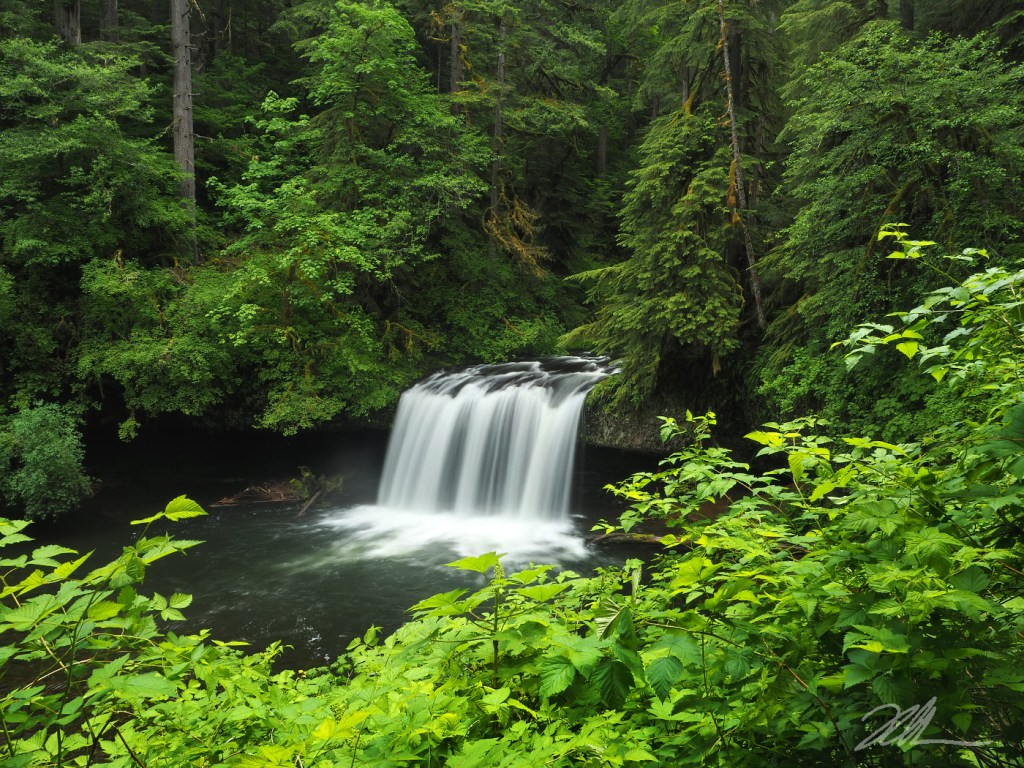
  • This striking basalt formation watches over a popular swimming hole in the lower Molalla River canyon. Columns often form when basalt lava cools, creating the familiar hexagonal rock pillars that are iconic throughout the Pacific Northwest. As lava cools, it shrinks from the top of the flow downward, slowing creating vertical cracks that define the columns. But, why are the pillars here arranged in the shape of a giant dinosaur eye? Scientists believe radiating column “rosettes” like these form in places where lava flowed into confined terrain or lava tubes, causing this uncommon, circular fracture pattern.

    The Molalla Eye is part of the Columbia River flood basalts that flooded across much of eastern Oregon and Washington and extended as far as the Oregon Coast. These are the ancient basalts that we see in the cliffs of the Columbia River Gorge, in the lower Clackamas River canyon and that make up the rows of hills across the northern Willamette Valley, where the flows have become inverted basalt casts of ancient valleys that once existed. These massive basalt flows pre-date the Cascade Range, itself.  As the Cascades grew and the Molalla carved its canyon, the river found a crack in this ancient basalt bedrock, sculpting it into the narrow gorge that reveals the eye and this beautiful pool.

    ___________

    Image Description: a moss-covered cliff face of basalt columns arranged in a rosette around an eye of solid basalt rises above a glassy, still pool of deep green in the Molalla River. Shallow riffles in the river fill the foreground where it flows from the pool over colorful, rounded river cobbles. 

    Photo © WyEast Images (2026)
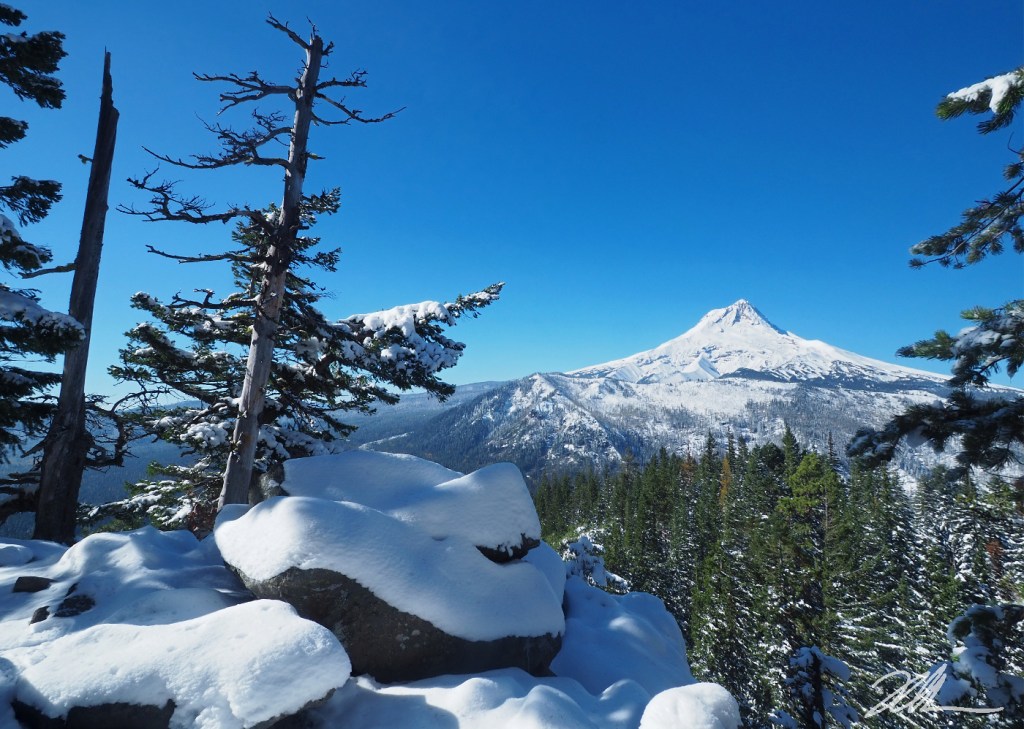
  • If you didn’t happen to know this is WyEast Country, you might guess this scene is somewhere in Colorado or Wyoming, yet this desert spot is less than two hour’s drive from rainy Portland. The view is from the rim of the lower Deschutes River canyon, directly above the historic Oak Springs Hatchery. A short user trail leads to this viewpoint from the Oak Springs access road. 

    At a time when we aren’t adding much public land in this country, the lower Deschutes River canyon has been an exception. For years, the Oregon Department of Fish and Wildlife (ODFW) and occasionally the federal Bureau of Land Management (BLM) have been acquiring private land within the canyon and its tributaries. Snowy Tygh Ridge , rising in the background in this view, is a different matter. The ridge is almost entirely privately owned and devoted to cattle ranching and wheat farming. 

    However, in recent years the ODFW has offered incentives to ranchers to rest large parcels along the north slopes of the ridge in past years for habitat, turning plowed fields into sprawling wildflower meadows. Will we someday see public land acquisitions of the ridge, itself?  Perhaps, as it’s an important wildlife corridor connecting the Deschutes canyon to the state-owned White River Wildlife Area in the Cascade foothills, to the west.

    ___________

    Image Description: A deep desert canyon with long shadows and steep brown and black walls gives way to the indigo-blue Deschutes River, far below. A small juniper and the bleached limbs of a sagebrush rise from rust-tinged boulders in the foreground. The gentle, snow-dusted slopes of Tygh Ridge stretch across the horizon against a clear blue winter sky.

    Photo © WyEast Images (2026)