

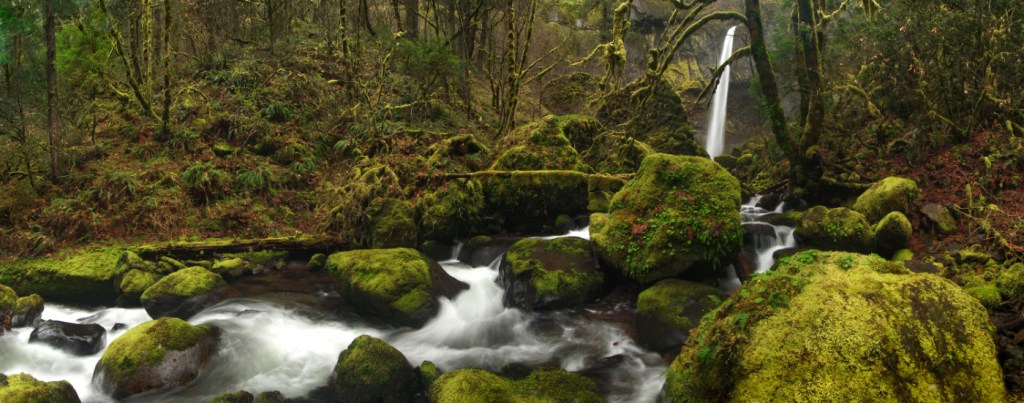
What is an idea campaign? Simply an effort to keep the idea of a Mount Hood National Park alive in the public memory. The national park concept is simple: it would embrace the original route of the historic Mount Hood Loop Highway, encompassing the Oregon side of the Gorge and Mount Hood, proper. The southern Clackamas district of the Mount Hood National Forest would be protected as an adjacent Mount Hood National Preserve, a notch below national park status, but a big leap ahead of today’s meager national forest protections.
The original national park idea moved forward in Congress in the 1890s, 1920s and 1930s. Like most of our national parks, there were powerful commercial development and private land interests that opposed the idea each time, and many would still oppose it today. Every new national park has weathered a political gauntlet before finally getting the protection it deserved, and thus persistence is paramount — even when measured in decades.
Welcome! This photo blog is the companion site to the WyEast Blog, and both are dedicated to the century-long dream of finally protecting Mount Hood and the Columbia River Gorge as America’s next national park. The original WyEast Blog dates back to 2008, part of a renewed “idea campaign” that kicked off in 2004.
I’m often asked “do you really think Mount Hood will become a national park?” Yes, I do. My confidence comes from the world-class natural and historic values unique to Mount Hood and the Gorge that are only becoming both more precious and vulnerable with time. There’s also an emerging shift in the conservation movement from solely focusing on preservation of the few remaining untouched places to restoration of spectacular places like Mount Hood and the Gorge.
While the WyEast Blog is a long-form space for deep dives, this companion blog is intended to complement that long-form content with single, hopefully captivating images of places around Mount Hood and in the Gorge, from the iconic to the remote and unknown. Short narratives describe the scene and the moment, and a detailed photo description is included for visually impaired folks. The site is designed with large images for viewing your desktop computer, laptop or tablet — but not so much for your smartphone, as the emphasis is on the images.
About the Images
My first camera was a Kodak 126 Instamatic at age 12, and I’ve been addicted to photography ever since. I’ve been shooting photos with single-lens reflex (SLR) cameras for 45 years and counting, and I still learn something new every time I go out in the field. My first SLR was the classic Olympus OM-1, and with that camera I also learned how to process film and print images in the darkroom.
Many cameras have followed, and I still have every one of them (enshrined in a cabinet, no less!). Today, I use a pair of digital SLRs and an iPhone when I’m out on the field. Both SLRs are Olympus OM-D E-M10 Mark iii (an unfortunate mouthful!) cameras that I’ve been using for seven years, now. Like that original OM-1, they are beautifully compact for carrying in a pack and holding in my hand. Subsequent Olympus models in this series have been released, I’m not really a photo gearhead, and haven’t felt the need to update (…just yet…).
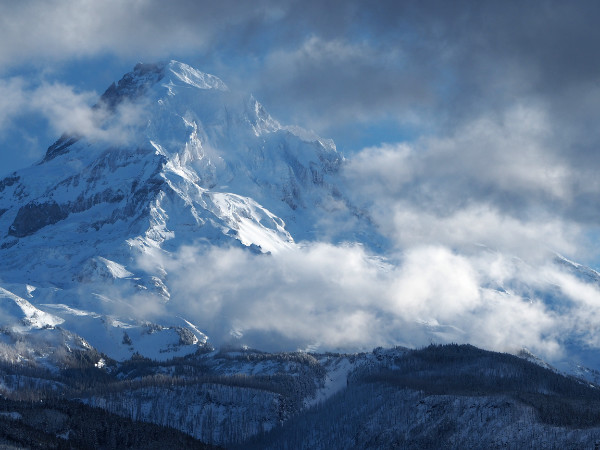
Many of the photos I post on this site are from this series of Olympus compact SLRs, though I sometimes post older stuff from earlier Olympus digital SLRs dating back to 2002, and occasionally you will see an iPhone image. Smart phone cameras have become an indispensable companion to DSLRs, and sometimes they are just the better camera for the moment!
I almost always use a polarizer filter (something professionals would advise against), as they are indispensable for me in capturing scenes in a way that best conveys what it was like to be there. I also use a tripod for most landscape shots – adding another 5 pounds to my already camera-heavy backpack. True to my early days with film photography, I bracket every scene with three images, typically at 1/3 f-stop intervals. This allows me to stack photos, often combining two exposures for the best overall image.
I used Photoshop for 25 years before becoming staunchly anti-Adobe over the past few years over their increasingly mercenary corporate mentality, and the subsequent impact on artists who relied upon and trusted their products from the beginning. Now, I proudly use Canva’s Affinity Creative Suite to process images – a powerful alternative I learned about from young creatives financially boxed out by Adobe’s predatory pricing.
And a final note: as an amateur photo enthusiast, I’m deeply committed to protecting the livelihood of professional photographers, many of whom are friends right here in WyEast Country. Thus, photos I post on this site are never for sale, and may not be used or reproduced without permission. Instead, please support the many fine nature photographers in our region – and reach out to me if you would like an introduction to some of them!
________________
If you’ve read this far, thanks for visiting this site, and I hope to see you out on the trail sometime in WyEast Country!
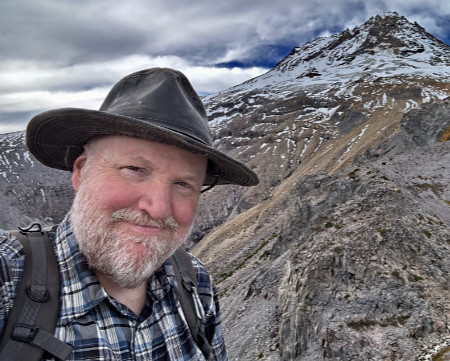
-Tom Kloster
 WyEast Images