

Head up to Surveyor’s Ridge in early November and you’ll be treated with the annual color show put on by our native Western larch. Unique among our big conifers as a deciduous species, the dense needles on these magnificent trees turn brilliant shades of yellow and gold in fall, then are shed just ahead of winter snows. This adaptation reduces their vulnerability to being toppled by strong winter winds and losing limbs to heavy snow buildup. In spring, a new coat of bright green needles will emerge from knobby buds that dot the tree’s bare winter limbs.
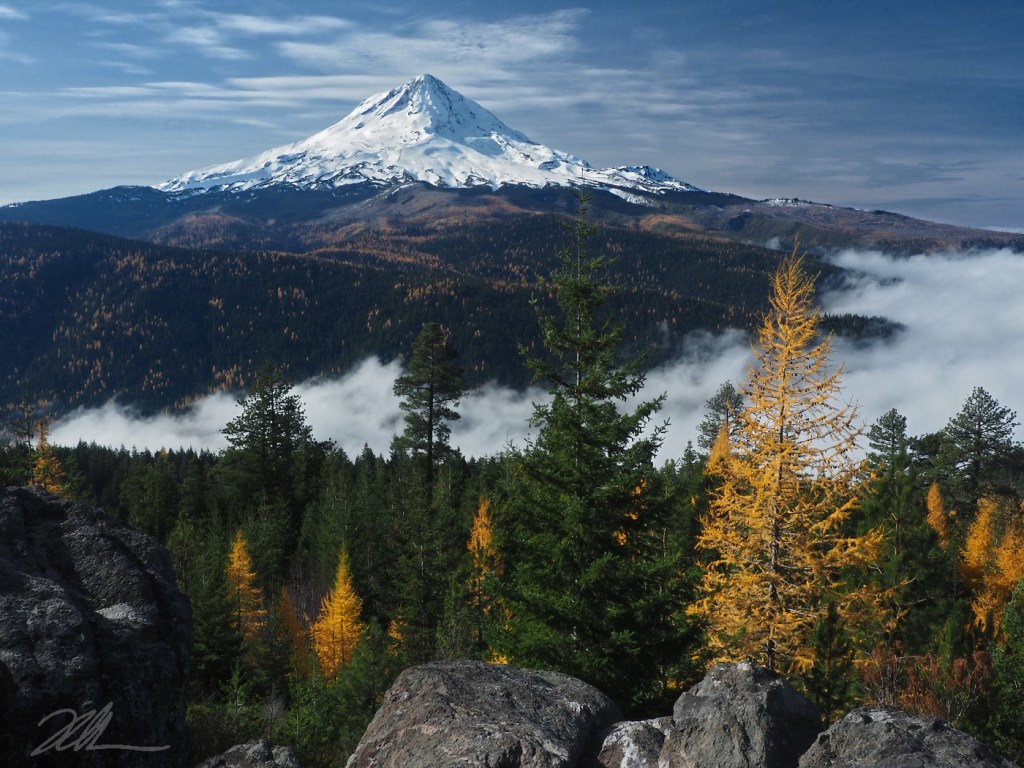
Western larch is a “fire forest” species that depend on periodic wildfires to thrive. They are quick to restore burned areas, as seen on the slopes of the mountain in this view. There, young larch trees by the thousands are restoring forests burned in the 2008 Gnarl Fire. The area in the foreground burned last summer in the Grasshopper Fire. We won’t know the extent of the impact of the fire on this scene until it has been reopened to the public, except that young Western larch will be among the first trees to rebuild the forest.
___________
Image Description: Mount Hood rises above an autumn scene of gold Western larch trees dotting the forests that sweep toward the mountain. High, thin clouds streak a pale afternoon blue sky. Valley fog flows into the canyons at the base of the mountain in drifts. In the foreground, grey, rounded boulders dotted with lichens frame the scene.
Photo © WyEast Images (2026)


Leave a Reply